
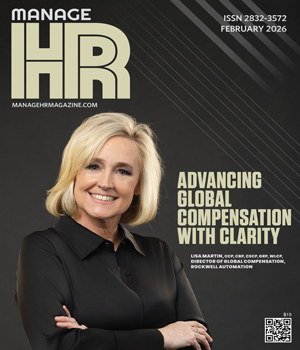
Advancing Global Compensation With Clarity

Top Nonprofit Interim Executive Placement Service 2026

In an environment shaped by workforce volatility, rising expectations of leadership accountability, and increasing complexity in people systems, this edition of Manage HR examines how organizations are strengthening leadership practice, reward structures, and resilience. The focus is clear: disciplined leadership behavior, evidence-based people decisions, and systems that translate intent into sustained performance.

The Abelson Group, recognized as Top Leadership Training Services 2026, strengthens leadership effectiveness through a human-centered, assessment-driven approach rooted in behavioral science. Through assessment-driven methodologies, the firm helps leaders understand their own behavior, how it shapes decision-making, and how leadership actions influence organizational outcomes. By emphasizing self-awareness, ethical judgment, and accountability, The Abelson Group supports organizations navigating change while maintaining consistency in leadership behavior and workforce trust.

Alongside this, Third Sector Company, recognized as Top Nonprofit Interim Executive Placement Service 2026, reframes executive transition as a disciplined leadership practice rather than a temporary disruption. Through its structured interim leadership framework and national academy, Third Sector Company enables nonprofits to sustain momentum, restore clarity, and prepare for long-term leadership success amid constrained resources and heightened scrutiny.

Jeff Charron, Director, Learning and Organizational Effectiveness at Pratt and Whitney explores the disconnect between knowledge and action, highlighting how organizational culture and unconscious behavior can prevent insight from translating into consistent leadership practice. In parallel, Heather Torres, Director of Learning and Development at Brown & Brown, brings clarity to the evolving language of capability development, decoding how skills taxonomy, ontologies, and competency models provide structure for upskilling and informed talent decisions.

Together, the stories in this issue underscore a central truth. Sustainable people leadership is built on clarity, disciplined execution, and systems that reinforce trust. Readers are invited to explore these perspectives and engage with the organizations shaping the future of HR leadership.


    Top Nonprofit Interim Executive Placement Service

    Third Sector Company provides trained interim leaders and technical support to charitable organizations, associations, and congregations throughout the United States during times of executive transition or organizational evolution. ... read full profile

Executive Search Info

Q1
What Do Top Executive Search Firms Do for Organizations?
Top Executive Search Firms help organizations identify, assess and recruit senior leaders for critical leadership roles. Their work typically focuses on C-suite executives, board members, division heads and other high-impact leadership positions that shape long-term business direction. Unlike standard recruitment firms, executive search providers conduct targeted outreach, leadership evaluation and market mapping to identify candidates with the right experience, cultural alignment and decision-making capability. Many Top Executive Search Firms also support succession planning, leadership consulting and executive assessment services. In industries facing talent shortages or rapid transformation, these firms help organizations reduce hiring risk and improve leadership continuity across complex business environments.
Q2
Why Are Top Executive Search Firms More Important Today?
Organizations are navigating leadership challenges tied to digital transformation, globalization, workforce shifts and changing business models. Top Executive Search Firms are becoming more important because companies increasingly need executives who can guide growth, manage uncertainty and lead distributed teams effectively. The executive search market has also evolved beyond traditional hiring models. Firms now evaluate leadership adaptability, industry expertise, communication style and long-term fit rather than relying only on resumes or title history. Demand has also increased for executives with experience in areas such as AI, cybersecurity, analytics and organizational change. Manage HR’s executive search coverage reflects how companies are treating leadership recruitment as a strategic business priority rather than a transactional hiring activity.
Q3
How Should Enterprises Evaluate Executive Search Firms?
Enterprises should evaluate executive search firms based on industry specialization, search methodology, leadership assessment capability and track record for executive placements. Sector expertise matters because leadership requirements differ significantly across industries such as healthcare, manufacturing, financial services and technology. Decision-makers should also examine how firms approach candidate research, confidentiality and cultural alignment. Many organizations prioritize firms that offer advisory support throughout the hiring process rather than simply presenting candidate lists. Global reach may also be important for multinational hiring initiatives, particularly when organizations need leadership talent across North America, Europe or APAC markets. The strongest executive search providers typically combine relationship networks, market intelligence and structured evaluation processes to improve hiring quality and leadership retention.
Q4
What Business Value Do Executive Search Firms Deliver?
Executive leadership decisions have a direct impact on business performance, workforce stability and long-term strategy. Executive search firms help organizations reduce the cost and disruption associated with failed executive hires by improving candidate alignment and leadership fit. For many businesses, the value extends beyond recruitment alone. Search firms often provide insight into compensation trends, leadership availability, succession readiness and talent competition within specific sectors. Organizations also rely on executive recruiters during periods of transformation, mergers, expansion or restructuring when leadership quality becomes especially important. Top Executive Search Firms can also help companies access passive candidates who are not actively applying for roles but may be open to strategic leadership opportunities through trusted industry relationships.
Q5
How Are Technology and Leadership Analytics Influencing Executive Search?
Technology is changing how executive search firms identify talent, evaluate leadership capability and manage candidate engagement. Data-driven research, talent intelligence platforms and digital assessment tools are helping firms improve precision in executive hiring. Many executive search providers now use analytics to evaluate leadership competencies, communication style and long-term organizational fit. Digital tools also help firms expand candidate networks across industries and geographic markets while improving search efficiency. At the same time, executive recruitment remains highly relationship-driven. Technology supports the process, but leadership hiring still depends heavily on human judgment, industry knowledge and executive credibility. The most respected firms balance data-backed evaluation with personalized leadership assessment and advisory expertise.
Q6
What Should Organizations Prioritize When Comparing Top Executive Search Firms?
Organizations comparing Top Executive Search Firms should prioritize alignment between business goals and leadership strategy. A strong search partner should understand organizational culture, growth objectives and the leadership traits required for long-term success. Enterprises should also assess communication transparency, search timelines, candidate quality standards and post-placement support. Firms with specialized industry expertise may offer stronger insight into leadership trends, compensation expectations and competitive hiring conditions. The most effective executive search relationships are built on trust, discretion and strategic understanding rather than transaction volume alone. As leadership expectations continue to evolve, organizations increasingly value search firms that can combine market intelligence, executive advisory capability and consistent candidate quality across leadership functions.
Take Me Top